



Professional Development for Texas K–8 Educators

Over ten years working with teachers in Helsinki, Winchester, New York, and Texas, I've learned what works: start with story, not syntax. Make algorithms tactile before they're typed. Let teachers experiment with their own students between sessions and come back to compare notes.
- Format: Live Zoom + mailed kit
- Schedule: 6 Fridays, 9 AM–2 PM CT · May–July 2026
- Stipend: $350 provided upon completion
What you and your school gain
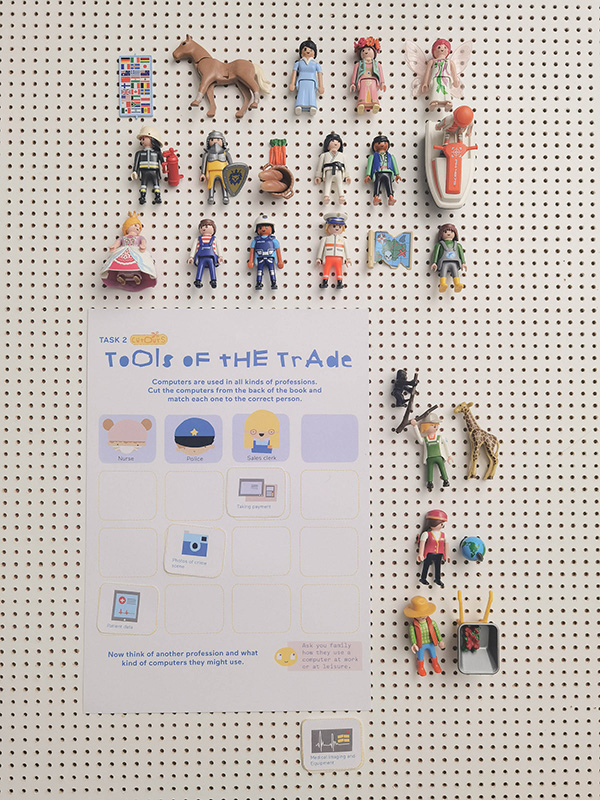
For you as a teacher
- Identity as a CS educator, not "I'm bad at computers"
- Concrete lessons you can run the next Monday morning
- Language to talk about algorithms, data, and networks with children
- A TEKS-aligned lesson plan, peer-reviewed by your cohort
For your school & district
- A teacher who can act as a local CS leader
- Reusable materials fitted to TEKS standards
- Documentation supporting strategic CS plans
- A humane narrative about technology to share with families
What teachers say
"I can't remember the last time I was on a course where the instructor was this enthusiastic. Linda's energy was contagious."
— Participant, 10-week online course
"The material we received is exactly the kind you can take straight into your own teaching."
— Classroom teacher, Finland
⭐ All respondents rated similar courses 5/5 overall and expected to use more than half of the ideas in their classrooms.
How the workshop unfolds

Six live sessions, 5 hours each. Fridays, 9 AM–2 PM CT.
Session dates: May 8, 22, 29 | June 5, 12 | July 10, 2026
Week 1: Foundations — Computational Thinking & Curriculum Building
We meet on Zoom. Your kit has arrived. We open the Hello Ruby books together and start with computational thinking through story and play. We build shared language around decomposition, pattern recognition, and abstraction, then translate those ideas into simple classroom routines using storyboards, manipulatives, and Hello Ruby stories.
Week 2: Build & experiment — Code & Scratch
We begin unplugged (card-sorting, rules, and “if/then” thinking), then bridge into block-based programming. The throughline is debugging as a learning stance: noticing, hypothesizing, testing, and revising—skills that work with or without screens.
Week 3: Build & experiment — Data & Algorithms
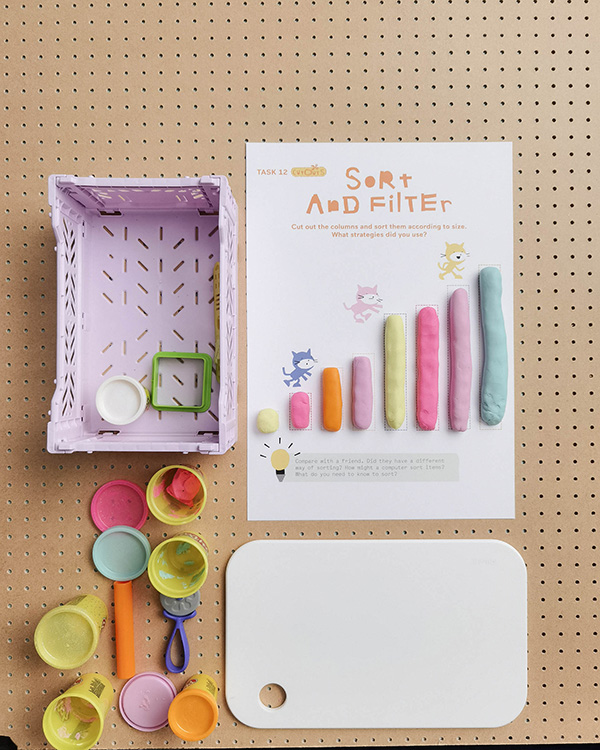
How do computers organize information? We use Play-Doh, classroom objects, and sorting games to make data structures and algorithms tangible. You’ll design a small, classroom-ready activity that surfaces how “order” is created—and what tradeoffs it introduces.
Week 4: Build & experiment — Hardware & Computer Systems
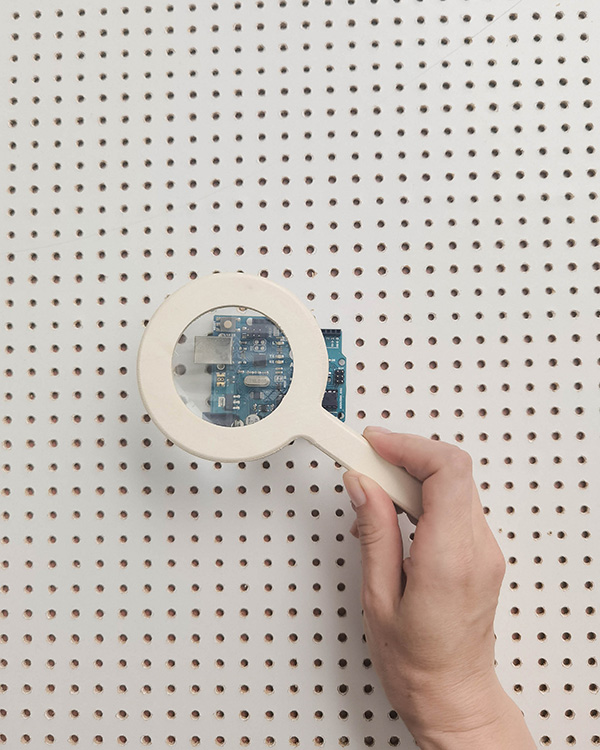
What’s inside a computer? We demystify inputs, outputs, processing, and memory through low-tech simulations, then connect those ideas to practical classroom conversations about devices and digital citizenship.
Week 5: Build & experiment — Computer Networks & Machine Learning
First: how computers talk to each other. We simulate message-passing and introduce age-appropriate cybersecurity and internet safety concepts. Then: how computers “learn.” We collect training data, test simple models, and discuss bias and ethics in ways that feel concrete for K–5.
Week 6: Share & refine — Presentations & Classroom Adaptation
You present your TEKS-aligned lesson plan, receive structured peer feedback, and refine it for your classroom context. We practice formative assessment moves you can use immediately, and we plan for sustaining this work—materials, routines, and a support network—after the workshop.
After the workshop
You leave with a complete lesson plan, a kit full of materials, connections to Texas CS educators, and the confidence to make computing accessible and joyful.
Important dates
February 1, 2026 Applications open
April 8, 2026 Application deadline (11:59 PM CT)
April 25, 2026 Selection notifications sent via email
Late April 2026 Kits ship (arrive before May 8)
May 8, 2026 Session 1 — We begin! (9 AM–2 PM CT)
May 22, 2026 Session 2 (9 AM–2 PM CT)
May 29, 2026 Session 3 (9 AM–2 PM CT)
June 5, 2026 Session 4 (9 AM–2 PM CT)
June 12, 2026 Session 5 (9 AM–2 PM CT)
July 10, 2026 Session 6 — Final presentations & capstone! (9 AM–2 PM CT)
Late July 2026 Certificates & stipends distributed
The Playful Computing Kit
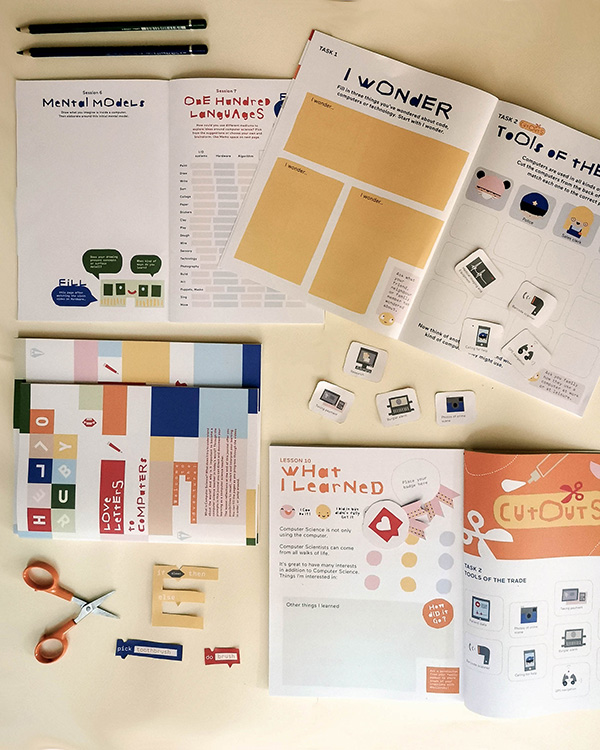
Each participant receives a curated kit, assembled and shipped from Austin before Session 1.
What's included
- 3 Hello Ruby books: Adventures in Coding, Journey Inside the Computer, and Expedition to the Internet
- Teacher Reflection Journal (32 pp, color)
- Student Passport workbook (72 pp, color)
- Mini Play-Doh set, sidewalk chalk, stickers
- Classroom poster
About the instructor
I'm Linda Liukas, TED speaker and author of the Hello Ruby series (translated into 30+ languages). I've designed playful computing experiences with cities and universities internationally, including New York City CS4All, Winchester Public Schools, and the University of Helsinki teacher education program.
I believe computational thinking works best when it's tactile,narrative, and joyful—and I'm excited to bring that approach to Texas educators.
Founder of Rails Girls | 2013 Ruby Hero | Digital Champion of Finland
Learn more about Hello Ruby books and resources →
Who should apply
These sessions are for people who care about learning first, technology second:
- K–5 classroom teachers new to computing (especially generalists told they need to teach CS)
- 6–8 STEM/Technology specialists wanting richer, more creative approaches
- Librarians, media specialists, and instructional coaches
- ESC staff and district coordinators planning CS integration
Most cohorts are mixed on purpose—kindergarten teachers alongside middle school specialists and curriculum coordinators, all working on shared ideas.
No prior CS teaching experience required.
Completion stipend
Upon completion of all six sessions and submission of your final lesson plan, you'll receive a stipend—a small thank you for your commitment to bringing playful CS education to Texas students.
This workshop is fully funded through WeTeach_CS at UT Austin. All materials, the stipend, and 30 hours of PD credit are provided at no cost to you or your district.
Program details
Workshop title: Playful Computing: Teaching Algorithms through Story and Imagination Format: Fully virtual (Zoom) + mailed kit Schedule: May 8, 22, 29 | June 5, 12 | July 10, 2026 · 6 Fridays, 9 AM–2 PM CT · 30 hours total Grade levels: K–8 (especially for K–5 generalists and 6–8 specialists) Experience level: Novice–Intermediate · No prior CS teaching required
What you'll need
- Laptop or desktop (Chromebook OK)
- Reliable internet & Zoom access
- Google account for document sharing
- Clear workspace for hands-on activities
Questions
Will sessions be recorded?
Yes, for makeup purposes. You can watch them for one week, but live attendance is required for the full experience.
Will there be a stipend?
Yes. Participants will receive a $350 stipend per educator upon completion of the full workshop (up to 20 educators).
Is substitute coverage available for Friday sessions?
Yes. We have a Participant Support reimbursement pool to help districts that require substitute coverage during Friday sessions. Districts can request *as-needed reimbursement up to $150/day per educator**.
When do kits arrive?
Kits ship a week before Session 1. You'll receive tracking via email.
What if there are too many applicants?
Selection is through lottery. All applicants will be notified of their status.
Can my district count this for PD hours?
Yes. You'll receive a certificate documenting 30 hours of professional learning from UT Austin/WeTeach_CS.
Need accessibility accommodations?
Contact Linda at linda@helloruby.com
Is there a cost to participate?
No. This professional learning is provided at no cost to educators or districts. You're also offered a stipend for a completed course.
How does registration work?
Registration is a two-step process. First, you submit your application through our online form. By April 25, 2026, you'll receive an email letting you know if you've been selected. If accepted, you'll then complete your official registration through the UT Austin system—details and a link will be included in your acceptance email.
What do I need technically?
- Laptop or desktop (Chromebook OK)
- Reliable internet & Zoom access
- Google account for document sharing
- Clear workspace for hands-on activities
What if I can’t attend a session live?
If you anticipate missing live time, email Linda as early as possible.
How do I support English learners / multilingual classrooms?
We’ll make the thinking visible and the language lighter: pictures and models, short sentences, partner talk, and switching between formats (code, play-doh, drawing). Students can show their ideas even if their English is still developing.
How do I differentiate for mixed readiness levels?
We’ll use “same task, different constraints”: fast-finishers get extension constraints (fewer steps, extra requirements), and learners who need support get worked examples, partial solutions, and checklists. Everyone participates in the same core idea.
Who do I contact with other questions?
Email Linda at linda@helloruby.com — include your district, grade band, and any constraints (blocked sites, device types) so we can respond quickly.
Join the spring cohort
Questions? Linda Liukas · linda@helloruby.com
This workshop is made possible through WeTeach_CS, a program of the Texas Advanced Computing Center at The University of Texas at Austin. Learn more